
❓Never seen it?A 1986 horror movie about killer robots in a mall.30 sec■ Close
- What it is
- A 1986 horror movie about killer robots in a mall.
- When
- 1986
- Who
- Directed by Jim Wynorski, produced by Concorde Pictures.
Teenagers trapped in a mall must survive against malfunctioning security robots.
For this pieceThe movie features a robotic hand on the cover holding a bag of severed limbs, but the actual film contains minimal gore and focuses on a siege scenario.
📼The LowdownVHS box art didn’t advertise movies, it staged a fake great movie on cardboard. Five classic covers, five humiliating on-screen receipts.▶ Play■ Stop
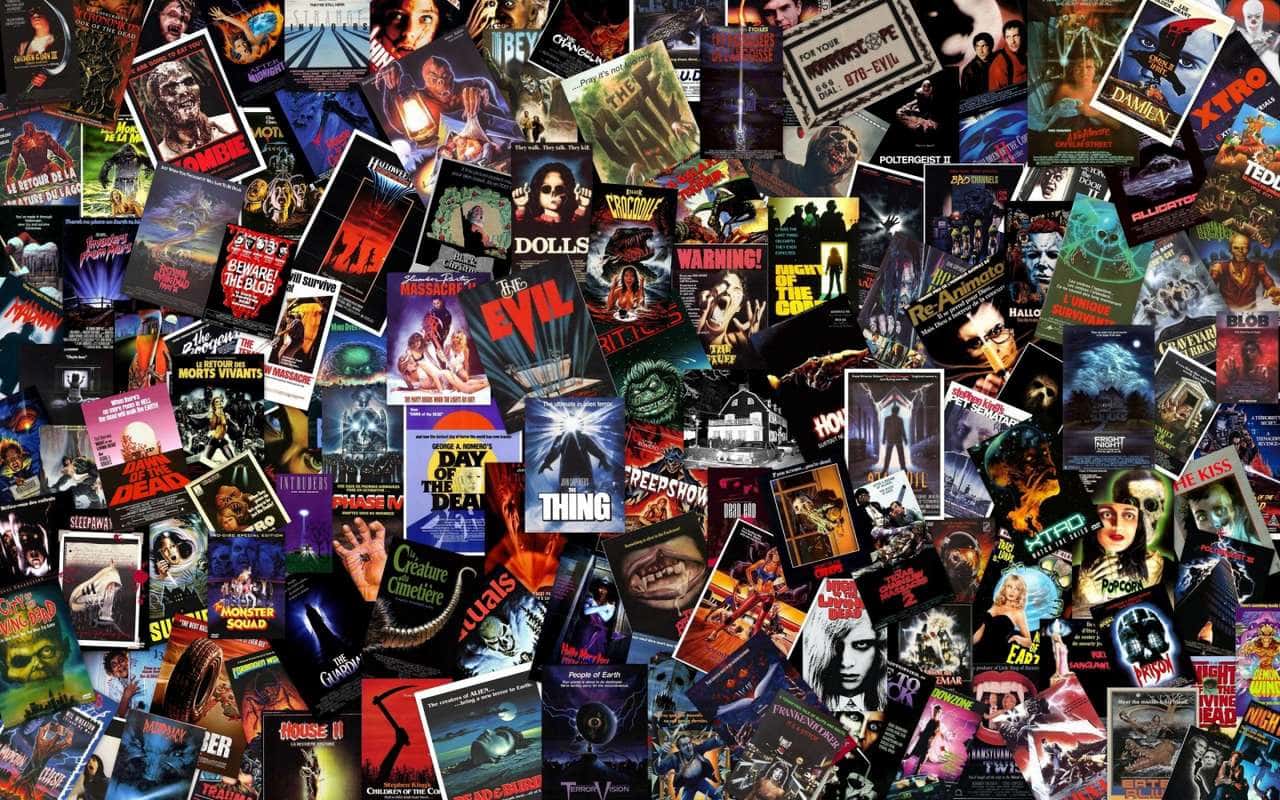
- VHS box art was a masterclass in deception, enticing viewers with thrilling visuals that often bore no resemblance to the actual movie experience inside the clamshell.
- The infamous cover for 'Chopping Mall' promised a gruesome dismemberment spree but delivered a tame siege film, leaving many rental customers feeling betrayed yet amused.
- 'Critters' marketed its tiny, puppet-like monsters as colossal threats on the VHS sleeve, creating a wildly different expectation than the chaotic, close-up antics of the actual film.
- The cover art for 'Sleepaway Camp II' borrowed heavily from other iconic horror films, misleading viewers into thinking they were renting a slick slasher classic rather than a campy sequel.
- 'Satan’s School for Girls' promised a wild ride of satanic horror, but the film itself delayed the actual thrills, showcasing the gap between expectation and reality in VHS rentals.
The lie starts before the VCR even clears its throat.
You are standing in the horror aisle under lights that make everyone look recently divorced. The carpet is that sticky-video-store gray, the kind that grabs your sneaker like it wants a relationship. Your fingers squeak the clamshell open just enough to feel the cheap plastic complain. Shrinkwrap glare hits you like a cop flashlight. And the cover, the beautiful, shameless cover, has already screened an entire movie in your head.
Not the movie on the tape. The movie on the cardboard.
That is the scam. VHS box art didn’t advertise movies, it strong-armed your hand into a rental by staging a fake “Great Movie” right on the sleeve. It didn’t say, “Here is a low-budget feature with some fun moments and a third act that kind of limps.” It said, “Here is the exact nightmare your living room ordered. Pay $3.99 and drive home imagining you made a smart, violent choice.”
And the worst part is, it worked. It worked because the cover delivered the scene your couch wanted even when the tape absolutely did not. The cover was a bouncer. The tape was the guy inside the club sweating through a rented tux.
So let’s do evidence-chain custody like we’re in a courtroom built out of clamshells and shame. Here’s what the cover promised. Here’s what the movie actually does. Then I’m going to close each case with a rental-store memory beat, because we all did time.
The cardboard jump-scare
The cover is a weapon. You don’t “choose” it. It selects you by punching your frontal lobe with an image that feels illegal to show under fluorescent lights.
Designers knew the trick: one hero pose, one forbidden prop, one neon font that looks like it smells faintly of ozone. Toss in a tagline that threatens your soul with “TRUE TERROR” in all caps, then let the clamshell do the rest. You aren’t buying a film, you’re buying the moment your friends will react when you hold the box up like a trophy in the car.
The tracking was off and it didn’t matter. The cover had already run perfect.
The severed-limb shopping bag that never happened (Chopping Mall)
The U.S. home-video art for Chopping Mall (1986) is a felony committed in airbrush.
The sleeve sets you up with a robotic hand gripping a shopping bag that is, no exaggeration, stuffed with severed limbs like it just hit a Claire’s Boutique clearance rack for dismemberment. The pose is confident, casual, consumerist. It’s basically saying: this movie will shoplift your organs while you’re trying on sunglasses at the mall.
Here’s what the movie actually does: it gives you Killbots (working title) turned into Chopping Mall, and then spends most of its roughly 72 minutes being a polite siege movie in a furniture store with lasers.
Yes, you get the famous head-pop. Mid-ride, a character’s head gets blown apart and for about five seconds you think, okay, the bag is real, the cover was honest, the mall is about to look like a butcher counter at the food court.
Then the movie immediately goes back to “people run, bots roll, sparks fly.” No shopping bag of limbs. No dismemberment spree. Just a lot of mall mayhem with the volume turned down.
Fangoria nailed the betrayal with the kind of bluntness that should be printed on the receipt: “Only problem is: no one in the movie got dismembered! (Unless you count the girl whose head was blown apart entirely.)” That’s your on-screen receipt right there. The cover promised a body-parts economy. The film delivered one explosion and a bunch of frantic jogging.
Rental-store memory beat: I remember staring at that bag art while my parent drifted toward the drama section like they were browsing vegetables. The clamshell squeaked when I pulled it out, and in my head the movie was already a gross masterpiece. On the drive home I was rewriting it shot by shot. The tape showed up like, “Hello, I am a modest mall robot movie.” I felt betrayed and, somehow, impressed by the confidence.
Big monster math (Critters)
Critters box art has always had a problem with numbers. Specifically, scale.
Certain U.S. VHS sleeves sell you Crites that look like they’re about to toss a station wagon like a beer can. Big teeth, big eyes, big menace, the kind of monster that suggests you’ll need the National Guard and at least one heroic explosion behind a silhouette.
The movie Critters (1986) is, on-screen, a small-puppet chaos business. The creatures are tiny, mean, and shot in tight close-ups where they scuttle, bite, and generally act like a sentient hairball with opinions. The barn and house sequences don’t hide it, they lean into it. The threat is that you can’t corner them, not that they can step on your house.
So the sleeve is doing “big monster movie” while the film is doing “gremlin-adjacent infestation.” It shouldn’t work. It does. Move on. But the mismatch is the point: the cover doesn’t want you imagining a bunch of little puppets gnawing your ankles. It wants you imagining a full-size creature feature, because that’s what feels like a “Great Movie” for $3.99.
You know what the cover is really selling? The fantasy that your living room is about to be too small for the chaos. Meanwhile the actual movie is shot to make the chaos feel too fast to catch.
Rental-store memory beat: the Critters clamshell was always dusty in the best way, like it had been handled by 400 nervous kids doing a covert operation while their parents pretended not to notice. You’d clutch it on the way to the counter like it was contraband. Then the tape starts and it’s small furry mayhem, which is fun, but it’s not the kaiju riot the sleeve just screamed at your face.
Prop and tagline cosplay (Sleepaway Camp II)
Sleepaway Camp II: Unhappy Campers (1988) has a VHS front sleeve that is basically identity theft.
Dread Central called this one out because the cover is out here doing a full Halloween and Nightmare on Elm Street mood board. You’ve got Angela posed with a hockey mask vibe and razor-glove energy, the exact kind of prop fetish that makes you think the movie will be a sleek slasher mixtape with iconic weapon shots and a villain who’s about to become a Halloween costume problem for decades.
And then the movie plays and the cover has “roughly nothing to do with anything that happens in the film.” That’s not me being dramatic, that’s the whole case. The sleeve is cosplaying a different movie because it knows you trust props more than you trust titles. A hockey mask silhouette is basically a notarized promise. The copy screams “true terror” like it’s signing a contract in blood.
On-screen receipt: you do not get the cover’s implied weapon-brand mashup. You get a sequel that has its own tone and its own brand of campy slasher nonsense, and it’s not the slick prop-forward nightmare the sleeve is pitching. The cover is selling you a shortcut to “Great Movie” status by borrowing other movies’ wardrobe.
I can’t believe this works, and I’m irritated that nobody else seems bothered. We all let the sleeve steal valor from better villains and we still paid.
Rental-store memory beat: there was always one cover you’d stare at too long, the way you stare at fireworks waiting for the pop. This one was that. You could feel your brain filling in scenes that didn’t exist yet. Then you get home, the VHS hiss starts, and you realize you rented a vibe that was printed, not filmed.
Satanic gore that shows up after roll-credits feelings (Satan’s School for Girls)
Satan’s School for Girls has a title that already sounds like it came with a free subpoena. The VHS art and box copy double down like they’re daring a parent to grab it out of your hands.
The sleeve signals the good stuff immediately. Satanic imagery, implied rites, the whole “this tape will ruin your weekend and possibly your soul” posture. It’s advertising visible, present-tense evil. The kind you can point at on the couch and go, “See? This is what I rented. I am living.”
But the on-screen receipt is petty: the movie delays the explicit Satanism until the denouement and keeps the carnage minimal compared with what the cover suggests. Dread Central’s read on the cover-to-movie betrayal is basically, “You wanted a ceremony, you got a slow burn and a late check-in.”
That is a particular VHS crime. The cover promised you’d be eating pizza while people in robes did something unforgivable in Act One. The tape waits until the end like it’s saving the devil for dessert.
Rental-store memory beat: the horror aisle was a neon confessional. You’d pick the most scandalous cover, not because you were tough, but because the clamshell looked like it might get you grounded. Then you’d watch the tape and it would behave for 70 minutes. You could almost hear the sleeve laughing from the coffee table.
Gold seals, fake stars, and printed runtimes (Half Human)
Now for the version of the lie that is so stupid it becomes art: the lie that is literally typeset.
The Rhino Home Video VHS release of Half Human comes with the kind of physical confidence that should get you arrested at the counter. Somewhere on that jacket, the runtime is printed as “78 minutes.” That’s not a vibe. That’s a number. That is math. That is supposed to be the one thing VHS packaging can’t get away with faking.
Except it can. Archival notes and viewing records put the U.S. cut at roughly 63 minutes. So the sleeve is inflating the movie like it’s padding a resume. Fifteen extra minutes, just casually added like the tape is going to grow into itself on the ride home.
And this is where the gold stickers show their teeth. Those circular “CRITIC’S PICK” or “4 STARS” seals, catching dust under the store lights, are basically a shiny object for your dumb rental lizard brain. They glare back at you like a badge. Sometimes they’re on the clamshell, sometimes on the shrinkwrap, sometimes applied by whoever felt like it. Provenance varies. Meaning varies. The effect is always the same: it makes the cardboard feel official.
The cover isn’t just staging a fake great movie, it’s manufacturing authority. A star rating is a costume. A runtime is supposed to be a fact. Half Human is the moment you realize the sleeve will lie about anything, including the length of your own disappointment.
Rental-store memory beat: I can still see those gold seals catching grime, like tiny suns over a shelf of lies. You’d stand there doing the mental math of a weekend. “Short movie” felt like a bad deal, so a bigger number, any bigger number, soothed you. Then you get home and the movie ends early and you sit there with the remote like it betrayed you personally.
The scam we kept volunteering for
Here’s the part that makes me laugh and grind my teeth at the same time: we weren’t tricked once. We enlisted.
We knew, on some level, the cardboard was running a con. But the con was tactile and committed. The clamshell squeaked like a door in a haunted house. The shrinkwrap glare looked like stage lighting. The fonts were neon threats. The cover didn’t just promise you a movie, it promised you a version of yourself who rented the right thing.
The tape could be mediocre, chopped down, padded out, or just plain different. It didn’t matter. The cover already delivered the scene your living room wanted, the one where the bag spills limbs, the monster is huge, the prop is iconic, the devil shows up early, and the sticker says you have taste.
Then you hit play and reality shuffled in wearing the wrong costume. And you still took the box back on time, slid it through the slot, and walked right back to the same aisle like a person who has learned nothing and is proud of it.

Danny “Rewind” Calder
Community Rewind
Join the Discussion
Loading comments…